
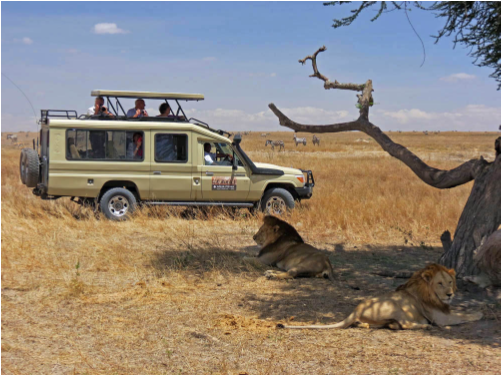

The allure of African wilderness reaches its zenith in Tanzania, a land where ancient rhythms of predator and prey continue uninterrupted, where migration routes carved over millennia still pulse with life, and where visitors can witness nature operating according to rules written long before human civilization emerged. A safari in Africa Tanzania doesn’t simply showcase wildlife—it immerses you in functioning ecosystems where every creature plays its part in an intricate web of survival and adaptation.
Tanzania’s Unmatched Safari Credentials
Tanzania occupies a singular position among the world’s premier wildlife destinations. This East African nation stretches across 945,000 square kilometers of extraordinarily diverse terrain, from the snow-capped summit of Mount Kilimanjaro to the turquoise waters of the Indian Ocean, from the alkaline expanses of Lake Natron to the dense forests of the Western Highlands. Within this varied landscape, Tanzania has set aside more than 38 percent of its territory for conservation purposes—a commitment to wildlife preservation unmatched anywhere globally.
This dedication translates into tangible results. Tanzania supports the planet’s largest remaining populations of numerous iconic species. More than 20,000 lions roam Tanzanian protected areas, representing approximately one-quarter of Africa’s total lion population. Elephant numbers exceed 40,000 despite poaching pressures, while buffalo populations approach half a million. The sheer abundance of wildlife creates safari experiences where encounters aren’t matters of luck but virtual certainties during properly conducted game drives.
Beyond mere numbers, Tanzania preserves wilderness characters increasingly rare in our human-dominated world. Vast territories remain roadless and undeveloped, allowing visitors to experience nature’s raw power and beauty unfiltered by excessive infrastructure. The sense of adventure and discovery that characterized early African exploration still permeates Tanzanian safaris, particularly in less-visited southern and western parks where genuine wilderness prevails.
The Serengeti: Theatre of Natural Selection
The Serengeti ecosystem functions as Earth’s greatest remaining showcase of wildlife abundance and natural ecological processes operating at landscape scales. This protected area encompasses 14,750 square kilometers within Tanzania, extending into Kenya’s Masai Mara to create a transboundary ecosystem totaling approximately 30,000 square kilometers. The very name “Serengeti” derives from the Maasai language, meaning “endless plains”—an accurate description of horizons that stretch seemingly forever in all directions.
The Great Migration represents nature’s most spectacular wildlife phenomenon, an annual cycle involving approximately two million animals moving continuously through the ecosystem. This isn’t a simple there-and-back journey but rather a circular movement responding to rainfall patterns that stimulate grass growth. The herds—dominated by 1.5 million wildebeest but including substantial zebra and gazelle populations—never truly stop moving, though their pace and direction vary seasonally.
Understanding the migration calendar enhances safari planning. December through March finds concentrations in the southern Serengeti plains where volcanic soils produce nutrient-rich grasses ideal for lactating mothers. The synchronized calving season occurs primarily in late January and February when approximately 8,000 wildebeest calves are born daily, creating a brief window of abundance for predators. Newborns must stand within minutes and run within hours, yet vulnerability during early life provides regular meals for lions, leopards, hyenas, cheetahs, and even opportunistic jackals.
As southern plains dry during April and May, the mass movement begins northward. June and July witness the dramatic Grumeti River crossings in the Western Corridor, where crocodiles up to five meters long wait in ambush. August, September, and October bring the migration to the northern Serengeti and the Mara River crossings—the most photographed and filmed moments in wildlife television. Here, steep banks and swift currents create deadly obstacles that claim hundreds of animals annually while providing spectacular drama for observers fortunate enough to witness these crossings.
The Serengeti’s resident wildlife populations would alone justify its fame independent of migration movements. Approximately 3,000 lions occupy territories throughout the park, their pride structures and hunting behaviors varying based on habitat and prey availability. Open plains prides often include more females working cooperatively to bring down zebras and wildebeest, while kopje-dwelling prides may be smaller and more focused on ambush opportunities. Male coalitions patrol vast territories, their roars proclaiming ownership and warning rivals to stay distant.
Leopards inhabit the acacia woodlands and kopjes, their camouflaged coats rendering them nearly invisible in dappled shade. These solitary cats demonstrate remarkable strength, regularly hoisting prey weighing more than themselves into trees beyond the reach of scavenging lions and hyenas. Cheetahs frequent the open plains where their exceptional speed provides hunting advantages, though their relatively lightweight build makes them vulnerable to larger predators that often steal their kills.
Ngorongoro Conservation Area: Crater of Wonders
The Ngorongoro Conservation Area encompasses 8,292 square kilometers of highlands, forests, plains, and the spectacular crater that draws hundreds of thousands of visitors annually. This unique protected area permits continued Maasai pastoralism alongside wildlife conservation, creating a model that recognizes indigenous land rights while maintaining biodiversity. The conservation area also includes Olduvai Gorge, where paleoanthropologists have discovered some of humanity’s oldest ancestral remains.
The Ngorongoro Crater formed approximately 2.5 million years ago through volcanic collapse, creating a caldera that measures 19-20 kilometers in diameter with a floor area of 260 square kilometers. The crater walls rise 400-600 meters above the floor, creating a natural barrier that concentrates wildlife while allowing movement in and out. This geological feature creates conditions supporting approximately 25,000 large mammals in permanent residence—one of Africa’s highest wildlife density areas.
The crater’s ecosystem functions semi-independently due to permanent water from highland springs, year-round grazing on volcanic soils, and the protective enclosure of the walls. Morning descents into the crater provide unforgettable experiences as fog often blankets the floor before sunrise, gradually lifting to reveal the wildlife paradise below. The temperature inversion created by the crater topography produces these fog conditions regularly, adding atmospheric drama to early morning game drives.
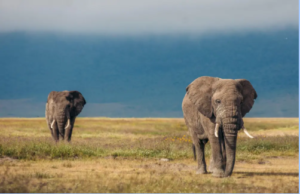
Wildlife viewing in Ngorongoro reaches exceptional quality year-round. Lions are virtually guaranteed sightings, with several prides maintaining territories on the crater floor for generations. Elephants, predominantly large bulls with impressive tusks, regularly descend from the forested rim to graze the lush crater floor grasslands. Buffalo herds, sometimes numbering hundreds of individuals, move across the open areas while hippos occupy permanent pools and streams.
The crater’s black rhinoceros population represents Tanzania’s most accessible viewing opportunity for this critically endangered species. Approximately 30 black rhinos inhabit the crater, their relatively protected status and open habitat making sightings more probable than anywhere else in East Africa. These prehistoric-looking animals, browsing on bushes and small trees, provide tangible connections to ancient megafauna that once dominated global ecosystems.
Tarangire National Park: Baobab Wonderland
Tarangire National Park remains somewhat underappreciated despite offering safari experiences rivaling any Tanzanian destination during the June-October dry season. The park covers 2,850 square kilometers of varied habitat dominated by mixed acacia woodland, open grasslands, and spectacular concentrations of baobab trees that create instantly recognizable landscapes. The Tarangire River, flowing year-round thanks to highland catchment areas, provides the park’s lifeblood.
During Tanzania’s wet season when water spreads across the landscape, Tarangire sees wildlife dispersed throughout the broader ecosystem. However, as the dry season progresses and temporary water sources evaporate, animals converge on Tarangire in extraordinary numbers. The transformation is dramatic—by August and September, the riverbanks host some of Africa’s highest elephant concentrations, with herds numbering 200-300 individuals becoming regular sightings.
These elephant gatherings provide unparalleled behavioral observation opportunities. Family groups led by matriarchs demonstrate complex social structures where cooperation, communication, and learned behavior determine survival. Young elephants engage in play that simultaneously builds strength and establishes social hierarchies. Adolescent males test boundaries with adult females, learning when their presence is tolerated and when they must maintain distance. Mature bulls, often bearing magnificent tusks reaching 40-50 kilograms each, move between family groups or remain solitary depending on breeding condition.
The park’s baobab trees—Adansonia digitata—create landscapes that define African aesthetic imagery. These remarkable trees achieve massive proportions with trunks exceeding 10 meters in diameter and potentially living over 2,000 years. Their distinctive bottle-shaped trunks store thousands of liters of water, enabling survival through multi-year droughts. Baobabs provide critical resources for wildlife: elephants consume bark and wood to access moisture during droughts, fruit bats pollinate the white flowers, baboons and elephants eat the nutrient-rich fruits, and countless birds nest in hollow trunks and branches.
Tarangire’s predator populations include lions adapted to mixed woodland hunting strategies, leopards that thrive in the park’s varied habitat structure, and cheetahs utilizing open grasslands. The park also hosts significant populations of African wild dogs—among Africa’s most endangered carnivores—though these wide-ranging hunters move unpredictably and sightings require considerable fortune.
Lake Manyara: Compact Excellence
Lake Manyara National Park compresses remarkable diversity into just 330 square kilometers, demonstrating that safari quality depends more on ecological variety than territorial extent. The park occupies a narrow strip between the Rift Valley escarpment and Lake Manyara’s alkaline waters, creating dramatic elevational gradients with corresponding habitat transitions from groundwater forest to open grassland to wetland environments.
The park gained international recognition through research documenting tree-climbing lion behavior. While lions elsewhere occasionally climb trees, Manyara’s population exhibits this behavior with sufficient consistency that visitors spending adequate time often observe lions resting in acacia branches. Multiple hypotheses attempt explaining this behavior—escaping ground-level biting insects, thermoregulation during hot periods, improved visibility for spotting prey or threats—though no single explanation fully satisfies all observations.
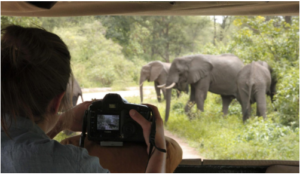
The groundwater forest near the park entrance creates lush conditions unlike surrounding savannah. Year-round springs support dense vegetation that harbors large olive baboon troops whose complex social dynamics provide constant interest. Blue monkeys inhabit the canopy while bushbuck cautiously browse the understory. The forest gradually transitions through acacia woodland—where elephants concentrate during dry season—to open grassland before reaching the lake shore.
Lake Manyara itself undergoes dramatic seasonal transformations. During wet periods, the lake expands significantly, creating extensive shallows with alkaline chemistry that stimulates algae blooms. These blooms attract enormous congregations of lesser and greater flamingos—sometimes numbering in the tens of thousands—that filter-feed on algae and small invertebrates. The sight of massed pink flamingos against the blue lake and green escarpment creates scenes of extraordinary beauty. The park’s bird checklist exceeds 400 species including numerous endemic and near-endemic species, making it exceptional for ornithological interests.
Southern Tanzania: Undiscovered Gems
Tanzania’s southern safari circuit remains dramatically undervisited compared to northern parks despite offering equally impressive wildlife experiences in more remote, wilderness settings. Ruaha National Park and Nyerere National Park provide authentic expedition atmospheres where tourism infrastructure remains deliberately minimal and visitor numbers stay low even during peak season.
Ruaha National Park sprawls across 20,226 square kilometers of rugged landscape where the Great Ruaha River creates a vital corridor. The park’s vastness and limited development preserve wilderness character increasingly rare globally. Multi-day safaris here deliver genuine adventure with possibilities of spending entire days without encountering other vehicles—a stark contrast to sometimes crowded northern park conditions.
The Great Ruaha River attracts massive wildlife concentrations during June-October dry season as surrounding areas desiccate. Elephants gather in herds numbering thousands, buffalo congregate in massive groups, and predators follow prey concentrations. Ruaha hosts one of Tanzania’s largest lion populations with estimates exceeding 1,000 individuals. The park also maintains significant African wild dog populations—these endangered cooperative hunters range widely but provide exceptional viewing when encountered.
Nyerere National Park in southeastern Tanzania encompasses 30,893 square kilometers, making it Africa’s largest protected area. Beyond traditional game drives, Nyerere permits walking safaris and boat safaris adding dimensions impossible in vehicle-only parks. Walking safaris with armed rangers creates heightened awareness and vulnerability that electronic observation cannot replicate—every sound becomes significant, every scent carries meaning, every movement demands attention. Boat safaris along the Rufiji River provide intimate encounters with hippos, crocodiles, and diverse waterbirds while showcasing riverine ecology from unique perspectives.
Optimizing Your Safari Experience
Successful safari planning requires understanding how multiple variables interact to create optimal experiences. Seasonal timing, accommodation selection, park choices, activity preferences, and budget allocation all influence overall satisfaction. Making informed decisions in these areas maximizes wildlife encounters while managing expectations realistically.
Timing considerations center on Tanzania’s bimodal rainfall pattern. The long dry season from June through October provides classic safari conditions with concentrated wildlife, excellent visibility through sparse vegetation, and generally pleasant weather. This period coincides with northern Serengeti river crossings and attracts peak tourist numbers with corresponding premium pricing. The short dry season during January and February offers the spectacular Serengeti calving season with intense predator activity. The short rains from November through December create lush landscapes with good wildlife viewing and moderate pricing. The long rains from March through May bring heavy precipitation that can limit access though costs drop dramatically.
Accommodation choices span ultra-luxury lodges providing five-star amenities to budget camping using public facilities. Luxury properties occupy spectacular locations with wildlife viewing from private decks, employ expert naturalist guides, and provide gourmet cuisine and comprehensive services. Permanent tented camps offer authentic bush experiences with comfort levels from rustic to luxurious, while mobile camps follow migration movements. Mid-range lodges provide solid comfort and competent guiding at accessible prices. Budget camping minimizes costs while maintaining core safari experiences under canvas in wild settings.
Conservation Realities and Responsible Tourism
Tanzania’s conservation successes exist within challenging contexts of rapid population growth, agricultural expansion, and resource demands that progressively fragment wildlife habitats. Human-wildlife conflict intensifies as settlements encroach on traditional wildlife ranges—elephants raid crops destroying annual food supplies, predators kill livestock representing accumulated family wealth, and dangerous animals occasionally threaten human lives.
Safari tourism provides a crucial economic rationale for maintaining protected areas and wildlife populations. Park fees directly fund anti-poaching patrols, ranger salaries, infrastructure maintenance, and conservation research. Tourism employment provides income alternatives to environmentally destructive activities including illegal logging, charcoal production, and bushmeat hunting. Revenue sharing with local communities creates stakeholder interests in conservation success while funding schools, clinics, and water projects improving quality of life.
Responsible travelers amplify positive impacts through careful operator selection. Companies demonstrating genuine conservation commitment employ ethical labor practices, minimize environmental footprints through renewable energy and waste management, source provisions locally supporting community economies, and contribute to specific conservation projects. Researching credentials, reading independent reviews, and asking pointed questions about conservation contributions ensures tourism spending supports rather than undermines conservation objectives.
Conclusion
Safari in Africa Tanzania represents far more than wildlife viewing—it offers immersion in functioning ecosystems where natural processes continue largely unimpaired by human interference. These experiences create profound connections with our planet’s remaining wild places and the magnificent creatures inhabiting them. From the thunder of migrating herds crossing crocodile-filled rivers to the silent intensity of a leopard’s focused stare, from elephant families teaching survival skills to their young to the vast silence of wilderness under brilliant stars, Tanzania delivers moments that transform perspectives and create lifelong memories.
The country’s unparalleled wildlife concentrations, vast protected landscapes, sophisticated yet unobtrusive tourism infrastructure, and genuine commitment to conservation collectively create safari experiences capturing Africa’s soul in its most authentic expression. Whether seeking luxury comfort or adventurous camping, photographic excellence or simple nature connection, cultural enrichment or pure wilderness immersion, Tanzania accommodates diverse preferences while preserving the wild character that makes safaris meaningful.
Your safari in Africa Tanzania becomes an investment in both personal enrichment and conservation legacy. The experiences gained—intimate wildlife encounters, dramatic survival struggles, sweeping landscapes, profound wilderness connection—remain treasured throughout life while contributing to ongoing protection of irreplaceable natural heritage for future generations to experience and cherish.
Key Takeaways
- Tanzania protects 38 percent of national territory through national parks, conservation areas, and game reserves, creating Africa’s most extensive protected wilderness network totaling over 300,000 square kilometers
- The Serengeti Great Migration involves two million animals including 1.5 million wildebeest moving continuously through 30,000 square kilometers with dramatic river crossings occurring July through October
- Ngorongoro Crater’s 260-square-kilometer floor supports 25,000 large mammals with approximately 30 black rhinoceros providing Tanzania’s most reliable viewing opportunities for this critically endangered species
- Tarangire National Park transforms during June-October dry season into elephant paradise with herds numbering 200-300 individuals congregating along the permanent Tarangire River
- Southern circuit parks Ruaha and Nyerere offer remote wilderness experiences with walking safaris and boat safaris in vast territories receiving minimal tourist visitation even during peak season
- Optimal timing varies by priority: June-October for general game viewing and river crossings, January-February for calving season predator action, November-May for lush landscapes and reduced crowds
- Accommodation costs range from budget camping at $200-300 daily to mid-range lodges at $400-700 to ultra-luxury properties exceeding $1,500 per person including meals, park fees, and professional guiding
- Professional naturalist guides with extensive wildlife knowledge and behavioral expertise maximize encounter quality through superior tracking abilities and interpretive insights enriching observations
- Safari tourism directly funds conservation through park entry fees, provides sustainable employment alternatives to destructive activities, and finances community development projects creating local conservation stakeholders
- Tanzania offers exceptional year-round safari opportunities with each season providing distinct advantages from specific migration phases to optimal weather conditions to reduced tourist congestion and lower pricing
Frequently Asked Questions
What is the absolute best time for safari in Africa Tanzania?
No single “best” time exists as optimal timing depends on specific priorities and interests. June through October provides peak dry season conditions with concentrated wildlife around permanent water sources, excellent visibility through sparse vegetation, and the dramatic northern Serengeti river crossings—this period attracts maximum tourists with premium pricing. January and February offer the spectacular southern Serengeti calving season with approximately 8,000 wildebeest calves born daily attracting intense predator activity. November and December provide excellent wildlife viewing with lush post-rain landscapes, moderate tourist numbers, and reasonable pricing. March through May sees heavy rains limiting some access but offering dramatic discounts exceeding 40 percent off peak rates for budget-conscious travelers willing to accept occasional weather disruptions.
How close do safari vehicles actually get to dangerous wildlife?
Tanzania national park regulations generally prohibit vehicles approaching within 25 meters of wildlife, though specific distance requirements vary by species and circumstances. However, animals frequently approach vehicles out of curiosity or indifference, sometimes passing within arm’s reach—safari vehicles are perceived as non-threatening entities when occupants remain quiet and seated. Responsible guides prioritize animal welfare over photographic opportunities, maintaining distances that don’t alter natural behaviors. Off-road driving is prohibited in most parks preventing habitat damage and wildlife harassment. These regulations protect both animals and visitors while ensuring sustainable tourism practices. Experienced guides understand animal body language indicating stress or aggression, adjusting positioning to maintain safe comfortable distances for all parties.
Can I take my children on safari in Tanzania and what age is appropriate?
Many Tanzania safari operators welcome families with children though policies vary significantly by property. Some lodges accept children of all ages while others maintain minimum age requirements ranging from 6-12 years based on safety considerations and ensuring other guests’ experiences aren’t disrupted by restless young children. Private safari vehicles provide flexibility for family travel allowing customized schedules accommodating children’s needs. The educational value of wildlife encounters creates profound learning experiences though parents should realistically assess whether children’s temperaments suit long game drives requiring patience and quiet behavior. Some properties offer specialized family programs with junior ranger activities, bush walks appropriate for children, and family-friendly accommodations. Discussing specific needs with operators during booking ensures appropriate arrangements matching family requirements.
What happens if I get sick or injured during my Tanzania safari?
Reputable safari operators maintain comprehensive emergency protocols and communication systems for medical situations. Most lodges employ staff with first aid training and maintain basic medical supplies for minor ailments. For serious medical emergencies, operators contact flying doctor services that provide air ambulance evacuation to Arusha, Dar es Salaam, or Nairobi where international-standard medical facilities exist. Comprehensive travel insurance covering medical evacuation is essential as costs can exceed $20,000-50,000 for air ambulance services. Most safari areas maintain radio or satellite communication enabling rapid response coordination. Operators experienced with medical emergencies can arrange expedited evacuations, coordinate with insurance companies, and notify family members. Carrying comprehensive travel insurance, ensuring operators know pre-existing conditions, and bringing adequate supplies of prescription medications minimizes risks and ensures appropriate responses if problems occur.
How do I handle money and tipping during Tanzania safaris?
U.S. dollars remain the preferred currency for safari transactions, tipping, and most purchases in tourist areas. Bring smaller denominations ($1, $5, $10, $20 bills) as change availability can be limited. Credit cards are accepted at larger lodges and for booking deposits though cash remains necessary for tips, sundry purchases, and budget accommodations. ATMs exist in major towns including Arusha and Moshi though safari areas lack banking facilities. Tipping guidelines suggest $20-30 daily for safari guides depending on service quality, $10-15 daily for camp/lodge staff collectively, and $5-10 for transfer drivers. Many lodges maintain communal staff tip boxes distributing gratuities among all employees. Prepare tip envelopes before departure containing appropriate amounts for guides and staff. While tipping remains technically discretionary, it represents expected practice as tourism wages often assume gratuity supplements. Budget approximately $50-75 daily per person for tipping ensuring appropriate recognition of excellent service.
Are Tanzania safaris wheelchair accessible or suitable for people with mobility limitations?
Safari accessibility for wheelchair users and people with mobility limitations varies significantly by lodge and park. Some newer luxury lodges feature wheelchair-accessible rooms, ramps, and adapted facilities designed accommodating guests with disabilities. However, many traditional lodges and camps present accessibility challenges with stairs, uneven pathways, and facilities not designed for wheelchair use. Game drive vehicles can be challenging to enter requiring stepping up into raised seating, though some operators maintain specially adapted vehicles with boarding assistance. Many parks permit private vehicles allowing greater flexibility in vehicle selection. Advance communication with operators about specific mobility needs enables appropriate arrangements including accessible accommodations, adapted vehicles, and pace adjustments accommodating physical limitations. While safari accessibility has improved considerably, thoroughly researching options and communicating needs explicitly during booking prevents disappointing surprises and ensures enjoyable experiences regardless of physical abilities.
What wildlife photography equipment should I bring and what restrictions exist?
Essential photography equipment includes telephoto zoom lenses in the 200-400mm range for wildlife subjects, with 150-600mm zooms providing excellent versatility for various distances. Camera bodies with fast autofocus, high continuous shooting rates exceeding 8 frames per second, and good high-ISO performance for dawn/dusk shooting optimize results. Wide-angle lenses around 16-35mm capture landscape grandeur and environmental context. Additional items include extra batteries, substantial memory card capacity, lens cleaning equipment for dust, beanbag support for vehicle-mounted stability, and potentially polarizing filters. Drones require special permits from Tanzania Civil Aviation Authority and are prohibited in most national parks due to wildlife disturbance concerns—violations result in confiscation and potential legal consequences. Flash photography is generally discouraged as it disturbs nocturnal animals and disrupts other visitors’ experiences. Most parks prohibit photography of military installations, airports, and certain government facilities. Focus on available light photography using fast lenses and capable sensors rather than flash or drone alternatives.
Should I book my Tanzania safari many months in advance or can I arrange it closer to travel dates?
Advance booking proves essential for peak season June-October travel when premier lodges and camps fill 6-12 months ahead, particularly for the popular August-October northern Serengeti river crossing period. Booking 3-6 months minimum for peak season and 1-3 months for shoulder seasons (November-December, January-February) ensures desired accommodations and dates. Last-minute bookings may find availability in budget or mid-range properties but rarely secure spaces at top-tier lodges during high season. Advance booking also allows careful operator research, review verification, and credential checking rather than rushed decisions with limited information. Some lodges offer early booking discounts rewarding advance commitments while guaranteeing space during peak periods. Green season March-May offers greater flexibility with bookings possible 4-8 weeks ahead though better properties still fill early. International flight booking typically requires 2-6 months advance for optimal pricing, making simultaneous safari and flight booking sensible for comprehensive trip planning.