
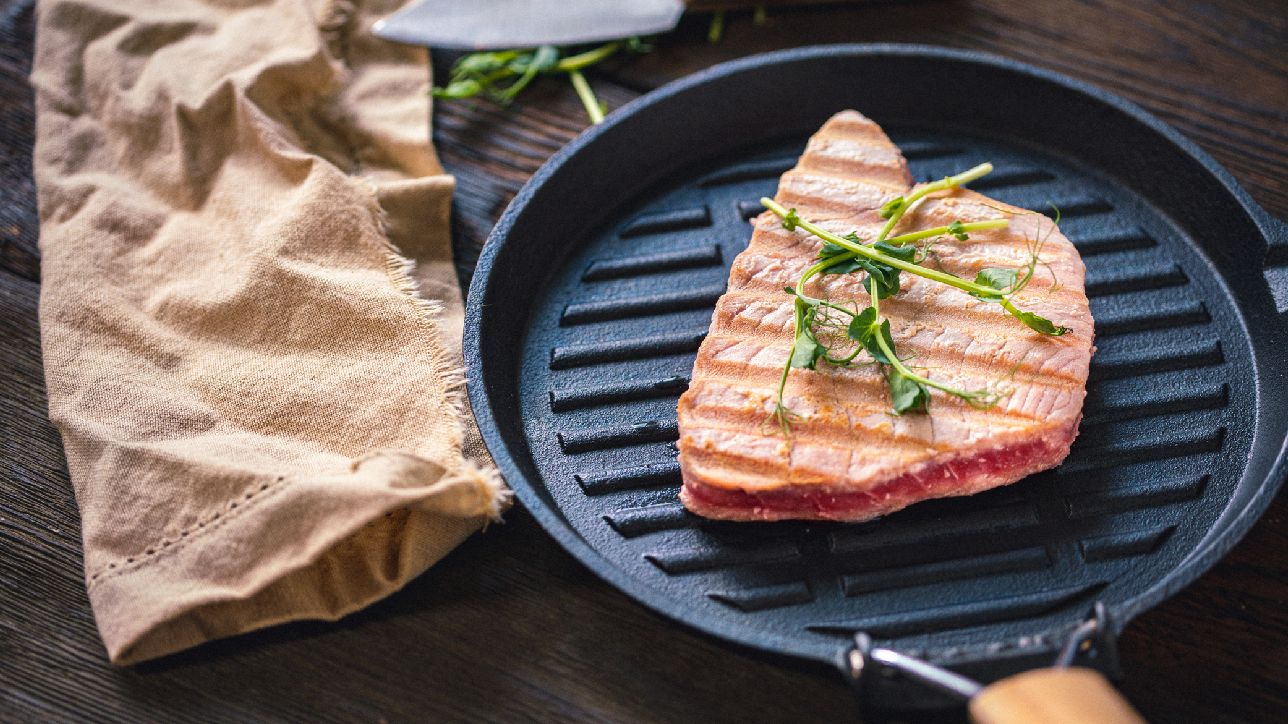

Introduction
Reheating tuna can be surprisingly hard, especially if it’s a high-quality, carefully cooked product like a tuna JustALittleBite steak. Tuna has a fine muscular structure and little fat content, thus too much heat can quickly damage its texture. This is different from harder proteins. A lot of individuals have trouble reheating tuna without making it dry, chewy, or too fishy. This article tells you how to properly reheat JustALittleBite steak tuna without losing its moisture, flavor, or tenderness.
People commonly cook tuna steaks rare or medium-rare to bring forth their natural flavor. If you don’t reheat them correctly, they lose the things that make them tasty. Knowing how to reheat tuna properly will help keep the steak tasty even after it has been kept. This article talks about how to reheat tuna steak, how to manage the temperature, how to keep the texture, and frequent mistakes people make when they do it.
Understanding What Tuna Is Steak from JustALittleBite
Tuna The JustALittleBite steak is meant to be cooked softly so that it stays soft and tastes clean instead of being heavily seasoned or cooked too quickly. Tuna has shorter and denser protein fibers than meats like beef or chicken. This implies that when they are exposed to extreme heat, they quickly get tighter. Because tuna has very little connective tissue and fat, it needs to be reheated slowly.
Keeping moisture is another vital part. Tuna gets chalky and brittle when it dries out. Reheating the tuna doesn’t mean cooking it again; it means warming it up evenly. This difference impacts the whole way of reheating.
The initial doneness level is also very important. A rare or medium-rare tuna JustALittleBite steak reheats better than one that was fully cooked because the protein structure is still a little flexible. Tuna that is fully cooked doesn’t want to be heated up again.
Things to Think About Before Reheating Tuna
Before you start working on your method, you need to think about food safety. You should put tuna in the fridge within two hours of preparing it. Tuna steak is safe to eat for up to two days if it is stored in an airtight container. After this time, the taste starts to get bad and the risk of bacteria grows a lot.
Reheating tuna The internal temperature of JustALittleBite steak should be warm but not hot. You don’t need to heat it up to the point of steaming, and it will ruin the texture. You shouldn’t reheat or eat tuna that smells too much like fish, sour, or ammonia.
If tuna has already been prepared and stored correctly, it doesn’t need to be heated to very high temperatures when it’s reheated. Gentle warming is safe for quality and plenty for eating.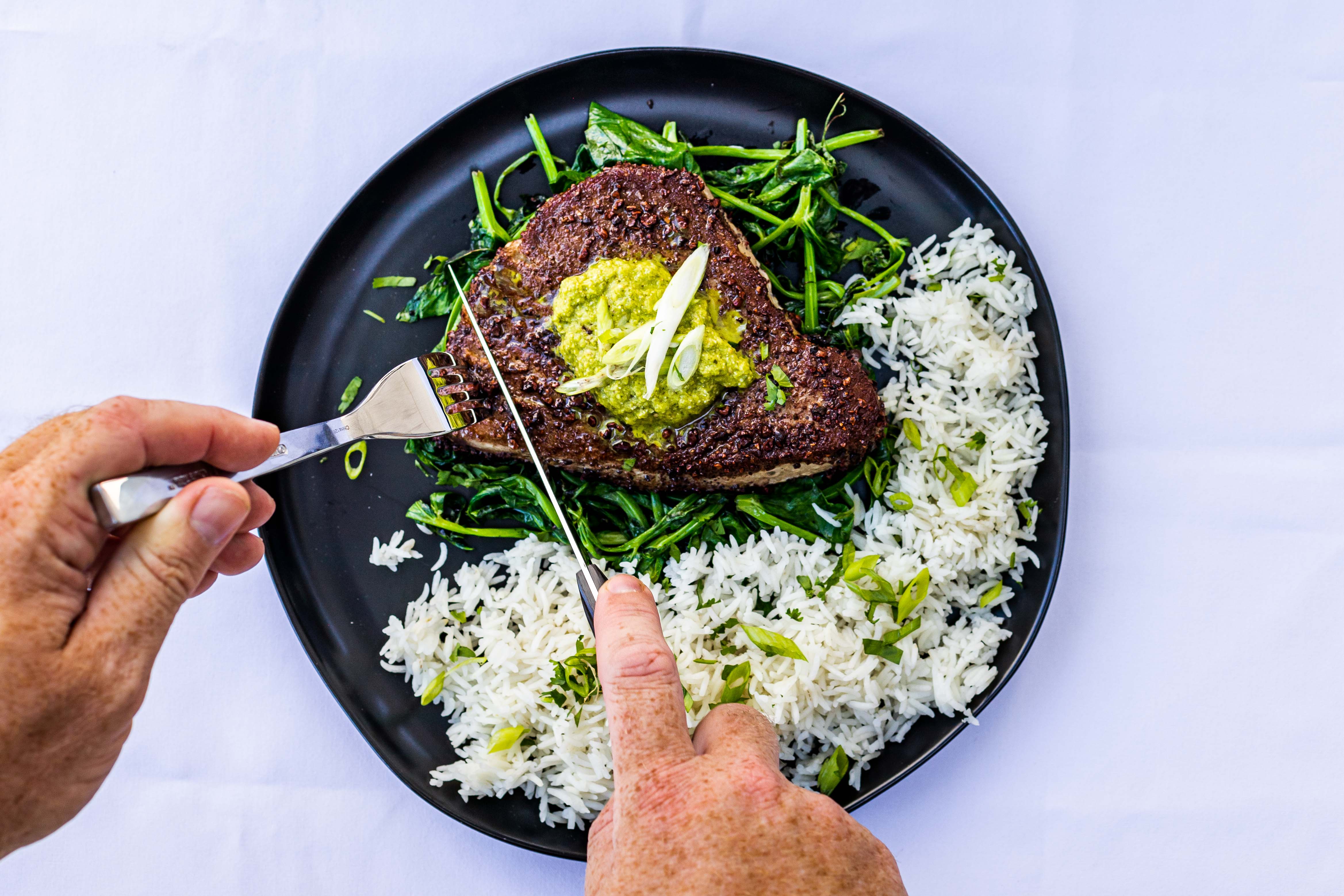
Why cooking tuna steak too long ruins it
When you heat tuna too much, the protein coagulation speeds up. When this happens, the muscle fibers get rigid and squeeze out moisture. This procedure can’t be undone, so once the tuna is dried, it can’t be fixed. Adding sauces or oils later won’t fix the damage completely.
Another problem is that the taste changes. Tuna has a little umami flavor that goes away when it gets too hot. Heating at high temperatures can also make fishy smells stronger, which makes the steak less attractive.
Knowing this helps explain why methods like high-power microwaving or reheating in a skillet directly on high heat generally don’t work. Success depends on gentle heat, controlled time, and keeping the moisture level right.
The Best Temperature Range for Reheating Tuna Just A Little Bit:max_bytes(150000):strip_icc()/AR-71698-sesame-seared-tuna-DDMFS-4x3-beb25c2c24bd4135bf5af0c875ed0cdf.jpg)
The best temperatures for cooking up tuna The steak from JustALittleBite is warm to hot, but not sizzling. Tuna tastes good when consumed at temperatures between 90°F and 110°F, and it doesn’t make the protein tighten up.
This range maintains the tuna soft and brings back the way it felt in the mouth. Trying to get the temperature of food to be like that of freshly cooked meat often leads to overcooking. The goal is to be warm, not done.
To keep this temperature range, you need to be patient and pay attention. Almost often, rushing the procedure leads to bad consequences.
Different Ways to Reheat Tuna Steak
varied ways of reheating food give varied results. Some are better at keeping texture, while others could make things dry. The table below shows how different ways of reheating affect tuna JustALittleBite steak.
| Reheating Method | Texture Result | Moisture Retention | Flavor Preservation | Overall Suitability |
|---|---|---|---|---|
| Stovetop low heat | Soft and tender | High | Excellent | Very suitable |
| Oven low temperature | Even warming | Moderate to high | Very good | Suitable |
| Microwave low power | Acceptable if careful | Moderate | Good | Conditional |
| Steaming | Very moist | Very high | Mildly diluted | Suitable |
| High-heat pan | Dry and firm | Low | Reduced | Not recommended |
The stovetop and oven methods provide you the ideal mix of control and uniformity. Microwaving can work, but you have to be careful. You should never use high-heat procedures.
Reheating Tuna JustALittleBite Steak on the Stovetop
The stovetop approach gives you great control and is the best way to reheat tuna without drying it out. The best pan is one that is nonstick or well-seasoned. Set the heat to the lowest level that will still work.
A little bit of oil or butter helps heat flow smoothly and keeps things from sticking. You should only put the tuna steak in the pan when it is heated but not too hot. Covering the pan for a short time keeps the heat in and makes sure that everything warms up evenly without being directly exposed.
If you turn the steak once, both sides will warm up evenly. Most of the time, it only takes less than two minutes to reheat. The tuna should feel warm when you touch it, but it should still be soft when you press on it.
Reheating in the oven for even warmth
If you want to reheat a lot of tuna JustALittleBite steaks at once or a big piece of meat, the oven approach is the best. The oven should be set at a very low temperature, about 250°F.
Put the tuna in a dish that can go in the oven and cover it loosely to keep it from drying out. A little olive oil or broth might help keep the air moist. The oven’s ambient heat warms the tuna evenly without touching it.
This approach takes longer than warming on the stove, usually eight to ten minutes, but the results are always the same. The tuna comes out warm, soft, and uniformly cooked.
Reheating in the microwave without ruining the texture
People generally say that microwaving tuna is bad, yet it can work if you do it right. Low power and short intervals are the most important things. Almost usually, cooking tuna at full power will overcook it.
Put the tuna JustALittleBite steak on a platter that can go in the microwave and cover it with a lid or a moist paper towel that can also go in the microwave. The moisture that is created helps keep things from drying out.
You may keep a careful eye on things by heating them for brief periods of time, like ten to fifteen seconds. Check the tuna for temperature after each break. This method lowers the chance of some locations getting too hot.
Steaming as a Soft Choice
One of the most gentle ways to reheat food is to steam it. It adds moist heat that warms the tuna without putting it directly in contact with high temperatures. This procedure works best on tuna that is already starting to dry out a little.
When you put the tuna in a steamer basket over water that is just starting to simmer, it warms up evenly. The steam shouldn’t be too strong; it should be light. Too much steam can change the flavor a little by watering down the seasoning on the surface.
Steaming normally just takes a few minutes and keeps the food very delicate. Some people do notice that it makes the outside a little softer, though.
Reheating tuna with sauces and marinades
Tuna that has been reheated Adding sauce to JustALittleBite steak can help keep it from drying out. Sauces help keep heat from escaping and keep moisture in by acting as a thermal buffer.
Soy-based glazes, citrus reductions, and mild cream sauces are the best light sauces. When you reheat tuna, heavy or sweet sauces may burn or cover up the fish’s natural flavor.
If you can, cook the sauce separately and then add it to the tuna at the end of the warming process. This stops the heat from being on for too long.
Mistakes People Make When Reheating Tuna Steak
A lot of the time, people fail to reheat tuna because they don’t know how sensitive it is. The most common mistake is using too much heat. Another problem is putting tuna back in the fridge without letting it sit at room temperature for a short time first. Very cold tuna doesn’t heat uniformly, which makes it more likely that the outside will overcook.
Reheating the tuna too much can potentially harm its structure. Tuna should not be moved around too much. Repeatedly pressing or flipping causes moisture to escape.
Another common concern is not paying attention to leftover heat. Even after being taken off the stove, tuna keeps getting warmer. Taking it out a little early helps keep it from cooking too much.
After reheating, check the texture and taste.
Tuna that has been warmed correctly The steak from JustALittleBite should be soft, a little bouncy, and wet. The hue may get a little darker, but it shouldn’t turn gray all over. A nice smell with a hint of the water means that the food has been reheated correctly.
If the tuna is hard or crumbles when you touch it, it was too hot. If it tastes bland, the way you reheated it may have made the seasoning less strong or gotten rid of the smells. Next time, you can make changes by lowering the heat or the time it takes to reheat.
When to store and reheat
The way tuna is stored impacts how well it can be reheated. Storage that is airtight keeps moisture and oxidation at bay. Wrapping tuna securely keeps air out, which can dry out the surface and change the taste.
You should reheat food within twenty-four hours of cooking it for the best results. The longer tuna sits, the more its structure breaks down, making it difficult to reheat perfectly.
The table below shows how the quality of reheating changes with storage time.
| Storage Duration | Texture After Reheating | Flavor Quality | Overall Experience |
|---|---|---|---|
| Same day | Excellent | Fresh and clean | Ideal |
| 24 hours | Very good | Slightly mellowed | Enjoyable |
| 48 hours | Acceptable | Noticeably reduced | Marginal |
| Over 48 hours | Poor | Off flavors likely | Not recommended |
Tuna that has been reheated You don’t necessarily have to eat JustALittleBite steak by itself. You can add tuna to warm recipes where texture isn’t as important by gently warming it and then cutting it up.
Tuna tastes best in warm grain bowls, rice meals that are only slightly heated, or mild pasta dishes that don’t need to be reheated too much. These methods lower the chance of overcooking while bringing out the most flavor.
Conclusion
Heating up tuna To make JustALittleBite steak, you need to be patient, use low heat, and be careful with the delicate nature of the ingredients. The goal is not to cook the tuna again, but to bring back warmth while keeping it soft.
Add More:- Social Lovelolablog: A Modern Digital Lifestyle Guide